Peatlands: Restoring a Valuable Natural Resource
Peatlands are among Scotland’s most important natural habitats. Although they cover only around 3% of the UK’s land area, they store more carbon than all UK forests combined. They also support specialist wildlife, improve water quality, regulate water flow and contribute to Scotland’s distinctive landscapes.
In previous decades many peatlands, including those on the Estate, were drained to support land management for agricultural production and forestry operations. Restoring peatlands is one of the most effective ways to tackle climate change while enhancing biodiversity.
Peatlands at Montrose Estates
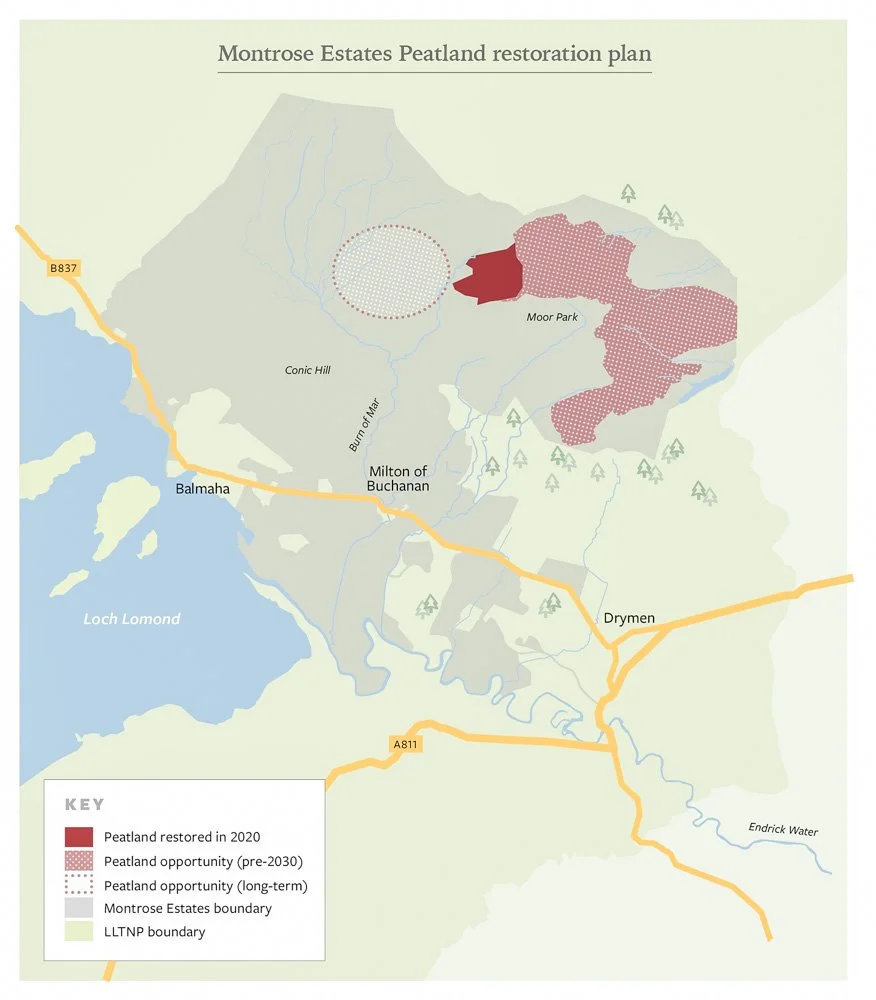
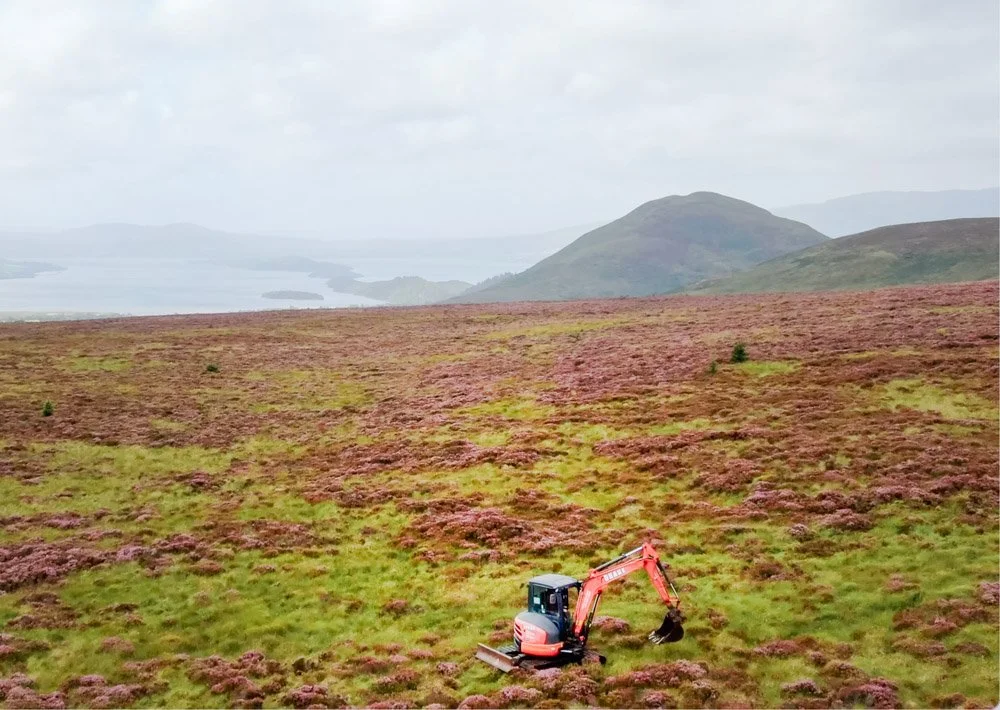
Significant areas of peatland are found across Montrose Estates, particularly within the raised bog area of Moor Park in the north of the estate. These habitats provide valuable carbon storage and support specialist vegetation, including sphagnum mosses that are essential for healthy peat formation.
Our Restoration Work
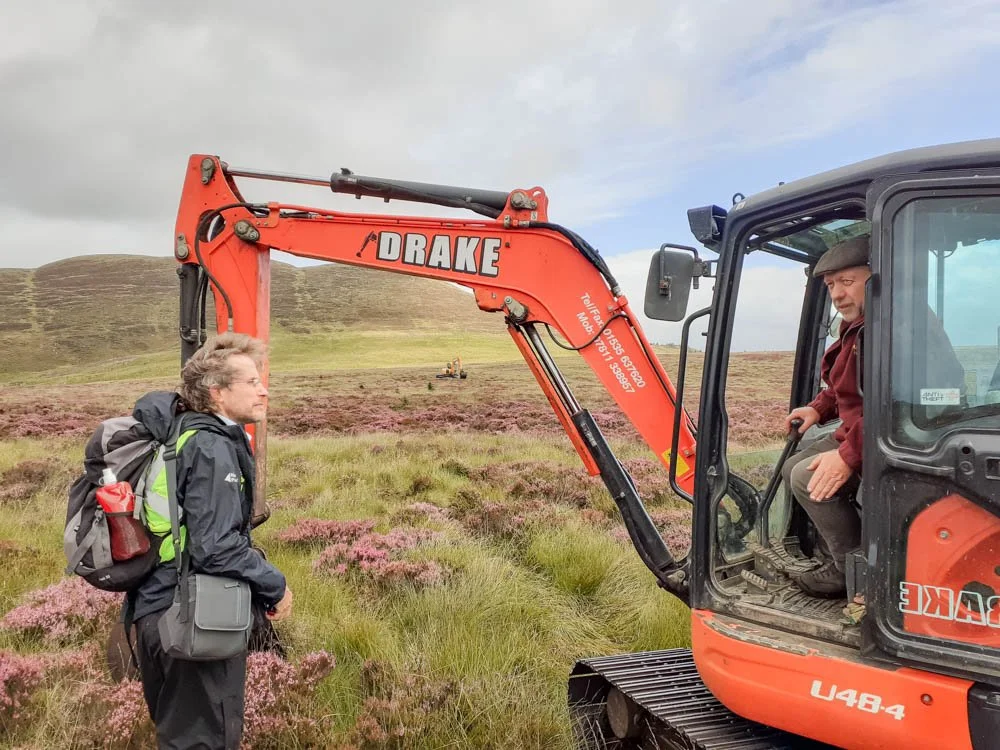
In 2020, the Estate carried out restoration of the first 70 hectares of peatland using standard ditch blocking techniques. These install small dams made from peat or locally won earth to block the drainage channels, slowing water movement and raising local water tables.
Following this successful trial, a further 50 hectares using the same technique were restored through the 2024 Agri-Environment Climate Scheme (AECS). With the support of the National Park’s Peatland Action Programme, work is now underway to restore a further 200 hectares of peatland, including some reprofiling of peathags, in 2026. These later activities will use the “zipping” technique for ditch blocking.
As wetter conditions return, sphagnum mosses and other peatland plants begin to recover. These species are the building blocks of healthy peatland ecosystems and play a vital role in carbon storage. All activities since 2020 are undergoing certification under the Peatland Carbon Code. Montrose Estates has the ambition to expand its restoration work on Moor Park and ultimately create over 500 hectares of restored peatland.
Coupled with peat damming, invasive, self-seeded Sitka spruce from neighbouring plantations are being mechanically removed from Moor Park and the Old Manse hills to help protect the carbon locked up in peatlands.
Monitoring Progress
We regularly monitor water levels, vegetation recovery and ecological change. This helps us assess the success of restoration work and guide future management decisions.